
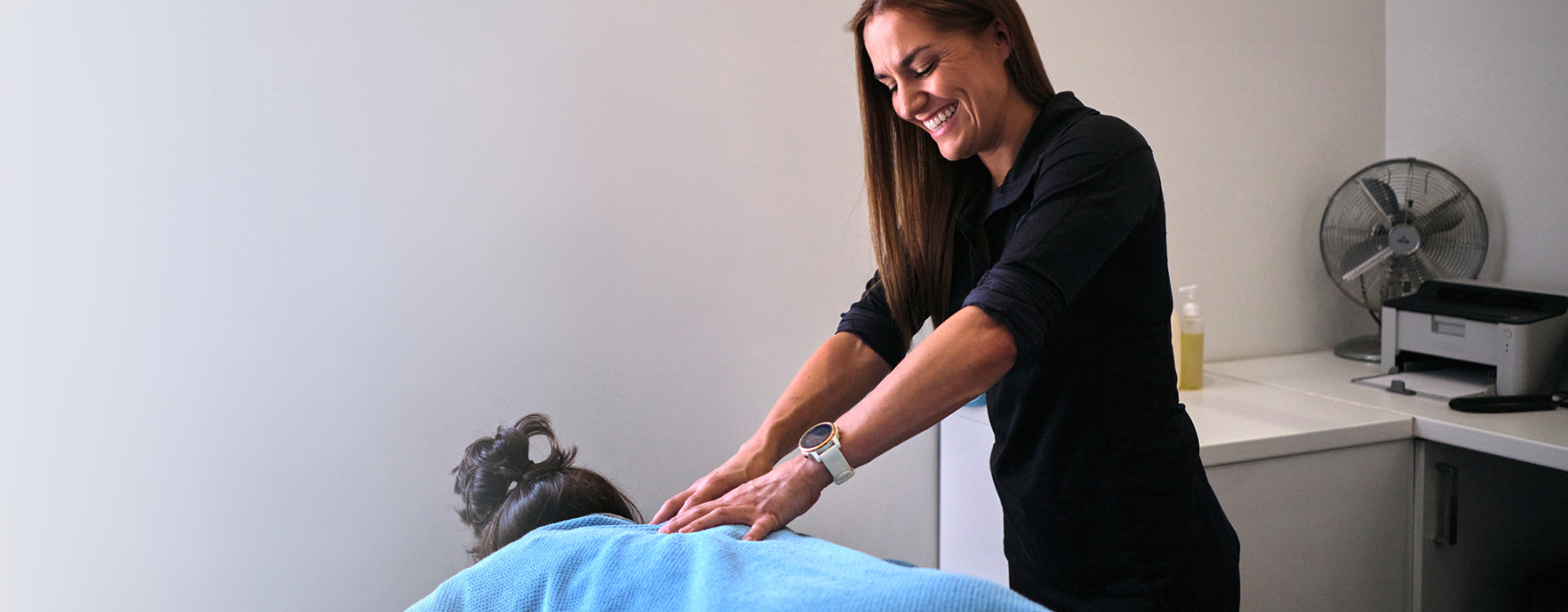


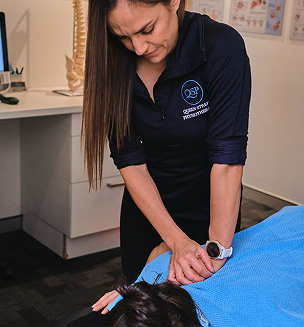

General Physiotherapy
We work with you to eliminate pain and increase your movement, mobility and quality of life.
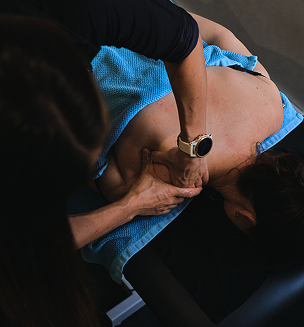

Remedial Massage
With our therapeutic remedial massage, we will increase your movement, reduce...
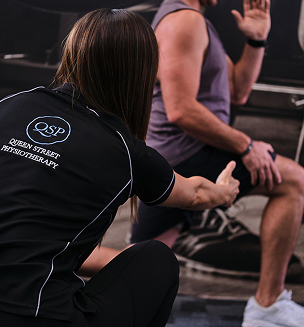

Sports Physiotherapy
Whether you are a recreational sportsperson or an elite athlete, injuries can occur...
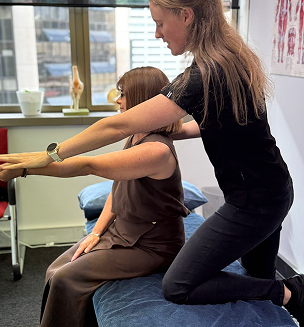

Workplace Physiotherapy
Office work can take its toll on the fittest body. Long hours sitting hunched over a computer...
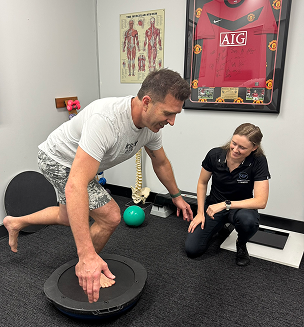

Track Active
When you visit one of our practitioners they may set you some exercises to do at home...

Forefoot vs rearfoot striking
By Matt Bushell The publishing of the book ‘Born to run’ by Christopher McDougall propelled the barefoot movement and minimalist shoes into the popular running world around 2009. And while the subject tends not to be as all-consuming as it once was, it’s left behind a question that we hear regularly from both experienced and aspiring runners; ‘should I run with a forefoot or rearfoot strike?’. Foot strike can be broken into 3 main categories; rearfoot, where your heel contacts the ground first, midfoot, where you contact the ground with a near flat foot and finally forefoot, where the ball of the foot touches the ground with the heel noticeably raised. Foot strike is variable in all runners and in general, running slowly will lend itself to more of a heel/midfoot strike. As pace increases, we move through to forefoot striking during sprinting. Similarly, hills often demand heel striking on descents and forefoot striking on climbs. When it comes to running, neither of these styles is categorically correct or incorrect. As with any movement in the human body, changes in pattern equal changes in demand on different structures. Each of these running styles is achievable for most people, but they require your body to deal with different forces so if you’re thinking of changing your running style, it’s best to prepare your body for the changes (generally through a strength and conditioning program) before you try and do too much volume (distance) with your new running style. Rearfoot strike Rearfoot striking is by and large the most common running style you’ll observe in the casual or weekend warrior running groups. It typically involves a longer stride length, a slower turn-over of your legs (less steps for an equivalent pace) and some cushy shoes to protect your heels (Ahn et al. 2014). The greatest detractor of the rearfoot striking style from an efficiency perspective is the fact that your foot contacts the ground a long way in front of your centre of mass which creates a braking force (Lierberman et al. 2015). Each time your heel strikes in front of your centre of mass, you lose some of your forward momentum and you need to expend more energy on your next push off to maintain your pace. In terms of forces, rear root striking increases the load on the hip and knee. Your quadriceps, hamstrings and your tibialis anterior (the small muscle on the front of your shin) then have to deal with increased work loads. Forefoot strike For the purposes of this article, we’ll combine both midfoot and forefoot striking effects below. Generally speaking, they’ll have similar effects in terms of structures loaded with load increased in the forefoot striking compared to midfoot. Forefoot striking generally requires an increase in cadence (footsteps per minute) for the same velocity as rearfoot striking. This increase shortens your stride length slightly and brings your ground contact point back underneath your body. This has the positive effect of reducing the braking forces mentioned earlier (Lieberman et al. 2015). Landing with a mid or forefoot strike increases the load on the ankle and foot complex and asks more of your calf and achilles tendon (Ahn et al. 2014, Almonroeder et al. 2013). It will also normally reduce your vertical impact loading rate. This means the impact force of your foot hitting the ground is spread over a greater time thereby reducing the magnitude of load your body has to deal with at any one time. Injury Rates During the peak popularity of the barefoot/forefoot striking movement, there was a thought that it may reduce injury rates. After studying runners over longer periods of time, we now know injury rates are similar regardless of which style of foot strike you employ (Zhou & Ugbolue 2019). Where we do see a possible increase in injury rates is when people attempt to change their running style. This is likely due to increased demand on the body in a way that it is not accustomed to. Running style is individual and large or sudden changes tend to have a negative impact on our body. However, sometimes changing your running style slightly can help to improve speed, increase endurance or overcome niggly injuries. If you’re looking to make a change in running style, or have an injury you’d like to address, your physio can help to provide a considered approach to your running frequency, volume, intensity and provide you with a complimentary strength program to ensure your body is up to the new challenges. Ahn, A., Brayton, C., Bhatia, T., & Martin, P. (2014). Muscle activity and kinematics of forefoot and rearfoot strike runners. Journal of Sport and Health Science 3 (2), pg 102-112. Almonroeder, T., Willson, J. D., & Kernozek, T. W. (2013). The effect of foot strike pattern on achilles tendon load during running. Annals of Biomedical Engineering 41, 1758-1766. Lieberman, D. E., Warrener, A. G., Wang, J., & Castillo, E. R. (2015). Effects of stride frequency and foot position at landing on braking force, hip torque, impact peak force and the metabolic cost of running in humans. Journal of Experimental Biology 218 (21), 3406-3414. Zhou, H., & Ugbolue, U. C. (2019). Is There a Relationship Between Strike Pattern and Injury During Running: A Review. Physical Activity and Health, 3(1), 127–134.
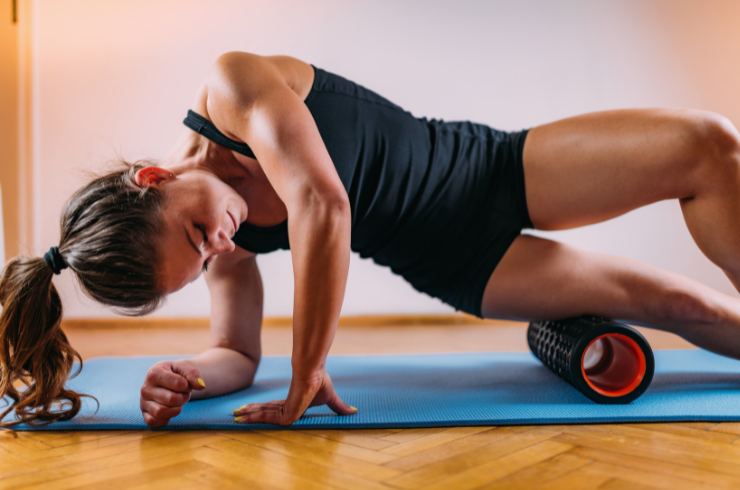
Flexibility – To Stretch or Foam Roll?
Matt Bushell Flexibility is the ability for a joint (or a combination of joints) to move through an unrestricted and pain free range of motion. The amount of movement available is affected by many structures including joint shape, joint capsules, ligaments, muscles, tendons and nerves. Increasing our flexibility can give us many advantages including increased movement options, force generation/dispersion and improving completion of functional tasks. Often it is assumed that an increase in range of motion at a joint after stretching is due to a muscle being lengthened. Interestingly, it may actually be due to an increase in your tolerance to tension which then allows you to stretch your muscle further and allow greater movement through the joint (Page. P, 2012). Once you reach the maximum amount of tension your brain and nervous system deems safe, your muscle will reflexively tighten to stop any further stretch – much like a safety switch. Therefore those who are ‘more flexible’ may simply have a greater natural tolerance to tension which allows them to bend their joints further than others. After stretching, the increased tolerance to tension only lasts for a period of time and then we tend to return to our individual baseline. The question is, will static stretching or foam rolling give you the best increase tolerance to tension and therefore flexibility? Static Stretching Static stretching involves stretching a muscle to a point (often near your maximum) and maintaining that stretch for an extended period. In theory, holding the stretch increases the tolerance of muscle spindle cells (stretch receptors in the muscle) to the tension applied and allows them to deal with greater tension for a time post-stretching. Research has found there is generally no further improvements in range of motion after 2-4 sets of 15-30 second holds and results last from less than 1 hour to a couple of days. (Knudson, 2010) Foam Rolling If you’ve never seen one, a foam roller is a self-massage tool used to ‘roll out’ your muscles or sore spots often referred to as trigger points. Theoretically the pressure from the roller stimulates pressure receptors in our skin and causes the brain and nervous system to reduce muscular activity. This then allows greater tension before activating the safety switch and tightening up the stretched muscle. Foam rollers can come in different sizes, densities and can vary in surface texture from smooth to bumpy or spikey. Rolling for 2-5 sets of 30-60 seconds has been found to have a positive effect on our flexibility with effects lasting for between 10 minutes and 7 days (depending on the individual). Bear in mind, from a Physiotherapists’ perspective the purpose of foam rolling is not purely to increase range of motion (and therefore flexibility), but also to reduce intramuscular tension (muscular knots) to facilitate a more supple and functional muscle. How about a combination? Combining both static stretching and foam rolling seems to provide a significant increase in range of motion over either modality in isolation. However, the duration of this larger increase appears to last for approximately 10-60 minutes (Mohr, 2014). This suggests it’s most useful application is right before a sporting event or exercise program that requires you to have increased flexibility for a time. It is important to mention though that static stretching may have a negative effect on power and strength output, so if your sport or exercise program requires high levels of strength or power, limiting yourself to foam rolling beforehand may be the most sensible option. Along with other techniques to address muscle length, physiotherapists can also use manual therapy and exercises aimed at joints, joint capsules, ligaments and tendons to positively influence your flexibility. As mentioned above, stretching and rolling results can vary quite a bit from one individual to another, so we recommend seeing your physio if you’d like an individualised flexibility plan. Knudson, D. (2010). The biomechanics of stretching. Journal of Exercise Science and Physiotherapy 2, 3-12. Mohr, A., Long, B., & Goad, C. (2014). Effect of Foam Rolling and Static Stretching on Passive Hip-Flexion Range of Motion. Journal Of Sport Rehabilitation, 23(4), 296-299 Page, P. (2012). Current concepts in muscle stretching for exercise and rehabilitation. International Journal of Sports Physical Therapy 7 (1), pg. 109-119.
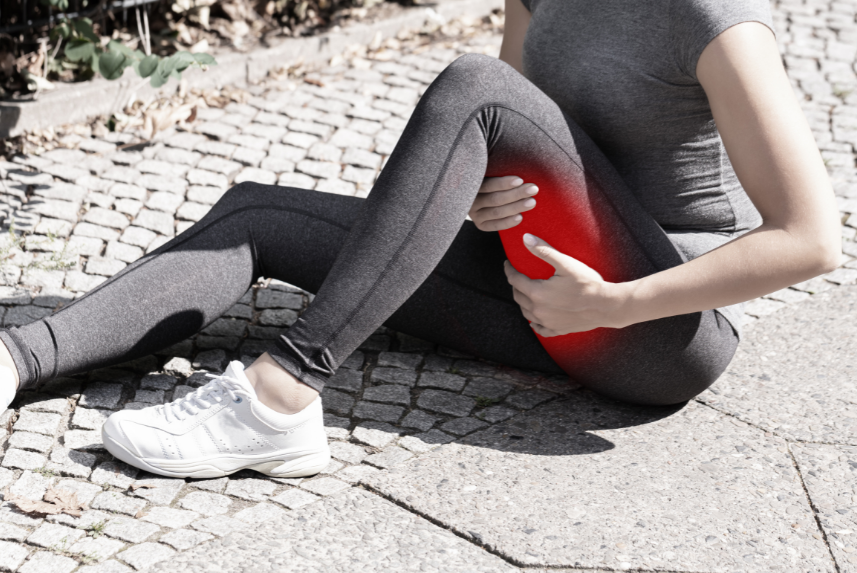
Hamstring Strains
Acute hamstring strains are common injuries for many popular sports, including various football codes, hockey, cricket and track and field. Hamstring injuries are the most common injury in Australian rules football, constituting 15% of all injuries, with an incidence rate of 6 injuries per approximately 40 players per season, and a prevalence rate of 21 missed matches per club per season. Similarly, in the English Premier League, hamstring strains make up 12% of all injuries. Acute hamstring strains also have the highest recurrence rate of any injury, a rate of 34% in Australian rules football and 12% in the English Premier League (Brukner & Khan 2015). There are two types of hamstring strains: Type I and Type II Type I Acute Hamstring Strains: Type I hamstrings strains are the more common injury type, which often occur during high speed running. They usually involve the long head of biceps femoris, most commonly at the proximal (upper) muscle-tendon junction. These generally cause a more marked acute decline in function but typically require a shorter rehabilitation period than Type II injuries. Case studies suggest that hamstrings appear to be the most vulnerable during the end of the swing phase of sprinting, where they are highly activated as they work eccentrically to decelerate the swinging tibia (shin) and control knee extension in preparation for foot strike. Symptoms usually consist of a sudden onset of pain in the hamstring region that interrupt the ability to run. Type II Acute Hamstring Strains: Type II hamstring strains often occur during movements leading to excessive lengthening of the hamstrings when the hip is in flexion, such as high kicking, slide tackles in soccer or performing the splits. These injuries more commonly occur in sports that require large amplitude movements such as ballet and gymnastics. The common mechanism of injury in these instances is an excessive stretch into hip flexion. These injuries are often located close to the ischial tuberosity (base of the buttocks on the pelvic bone) and can involve the semimembranosus (one of the hamstrings’) tendon. Type II strains often cause a less dramatic acute limitation than Type I strains, though their rehabilitation is often longer. Passive stretching and heavy-load exercises seem to aggravate these hamstring injuries. Signs and Symptoms: An acute hamstring strain results in a sudden, minimal to severe pain in the posterior thigh, sometimes with a characteristic “popping” or tearing impression. Swelling and bruising are possible but may not occur for several days after the date of injury. Loss of joint active range of motion in the knee and hip can be apparent as well as decreased strength and length of the injured hamstring. Rarer symptoms can include numbness, tingling, and distal extremity weakness. These symptoms require further investigation into sciatic nerve irritation as a result of either impingement of the nerve or secondary injury. Large hematomas (swollen muscular bruising) or scar tissue can be caused by complete tears and avulsion injuries. Hamstring strains are categorised in 3 groups, according to the amount of pain, weakness, and loss of motion: Grade 1 (mild): just a few fibres of the muscle are damaged or have ruptured. This rarely influences the muscle’s power and endurance. Pain and sensitivity usually happen the day after the injury. Walking is usually able and the knee can still bend normally. Grade 2 (medium): approximately half of the fibres are torn. This will influence the muscle’s power and endurance, and can include a limp with gait. There is occasional swelling, often bruising (which may or may not come to the skin surface) and pain which can be reproduced by bending the knee against resistance. Grade 3 (severe): ranging from more than half of the fibres ruptured to complete rupture of the muscle. Both the muscle belly and the tendon can suffer from this injury. It causes large swelling, bruising and pain. The function of the hamstring muscle can’t be performed anymore and the muscle shows great weakness. Prognosis of Hamstring Injuries: The following factors have been shown to be associated with increased length of time to return to play: Time to walk at normal pace pain-free has been shown to be significantly associated with return to play time (>1 day = 4x more likely to take >3 weeks). Combining this with a past history of hamstring injury within 12 months results in a 93% chance of taking longer to return to play. Days to jog pain-free is the strongest predictor of time to return to play: 1-2 days = < 2 weeks 3-5 days = > 2 weeks > 5 days = > 4 weeks The closer to the ischial tuberosity in a biceps femoris injury, the more prolonged the time to return to pre-injury level. Injury to the tendon of the semimembranosus muscle is associated with a recovery period of twice as long of those without tendon injury. The length and cross sectional area of the tear results in prolonged return to play. (Brukner & Khan 2015) Risk Factors for Acute Hamstring Strains: Risk factors for a hamstring strain may be intrinsic (patient related) or extrinsic (environment related). Body Mass Index (BMI), height and weight have been ruled out as factors for hamstring strains through the use of functional performance tests. Intrinsic factors: Age: Athletes from older age groups are at an increased risk of an acute hamstring strain. For example in Australian rules football, players older than 23 years of age are 4 times more likely to sustain an acute hamstring injury. This may be related to reduced hip flexor length, but it has also been suggested that it could be in relation to degenerative changes at the lumbosacral (base of the spine) junction. Past history: In comparison to injury-free athletes, those with a past history of hamstring injury demonstrate differences in hamstring muscle volume, scar tissue and contraction mechanics. The presence of scar tissue creates higher rates of localised tissue strains in adjacent muscle fibres. Athletes with a history of other lower limb or lower back injuries

Phill Forostenko
Principal Physiotherapist
and Exercise Physiologist

Norman Sossi
Senior
Physiotherapist

Ellen Bailey
Senior
Physiotherapist

Nick Henkeli
Remedial
Massage Therapist

Nicola Poole
Reception


